GARDNERVILLE, Nev., October 2026. Thirty-eight years after the Recreational Dive Planner (RDP) was introduced, DepthPlanner is announcing a modern approach to dive planning: browser-based software designed to make planning clearer, more accessible, and available offline.
The announcement follows a long shift in how divers prepare for dives. The RDP, developed by Diving Science and Technology (DSAT), a PADI research affiliate, was introduced in 1988 as a decompression table specifically for recreational no-stop diving. Its table and circular Wheel gave recreational divers an alternative to using U.S. Navy tables, which were developed for different operational needs.
The RDP’s later electronic versions changed how divers interacted with the tool, but not its underlying model. DepthPlanner says the industry still lacks a broadly adopted, modern planning experience that makes it easy for divers to prepare a plan before entering the water.
Scott Fontecchio, CEO of DepthPlanner and a working dive instructor, says that gap is not only technical. It is also a usability problem.
“As an instructor, I watched students learn the planning steps and then stop using them once they were certified. The tools available felt like a barrier: dense tables, awkward wheels, or apps that made a simple plan harder than it needed to be. I wanted to build a planner that people would actually open before a dive.”
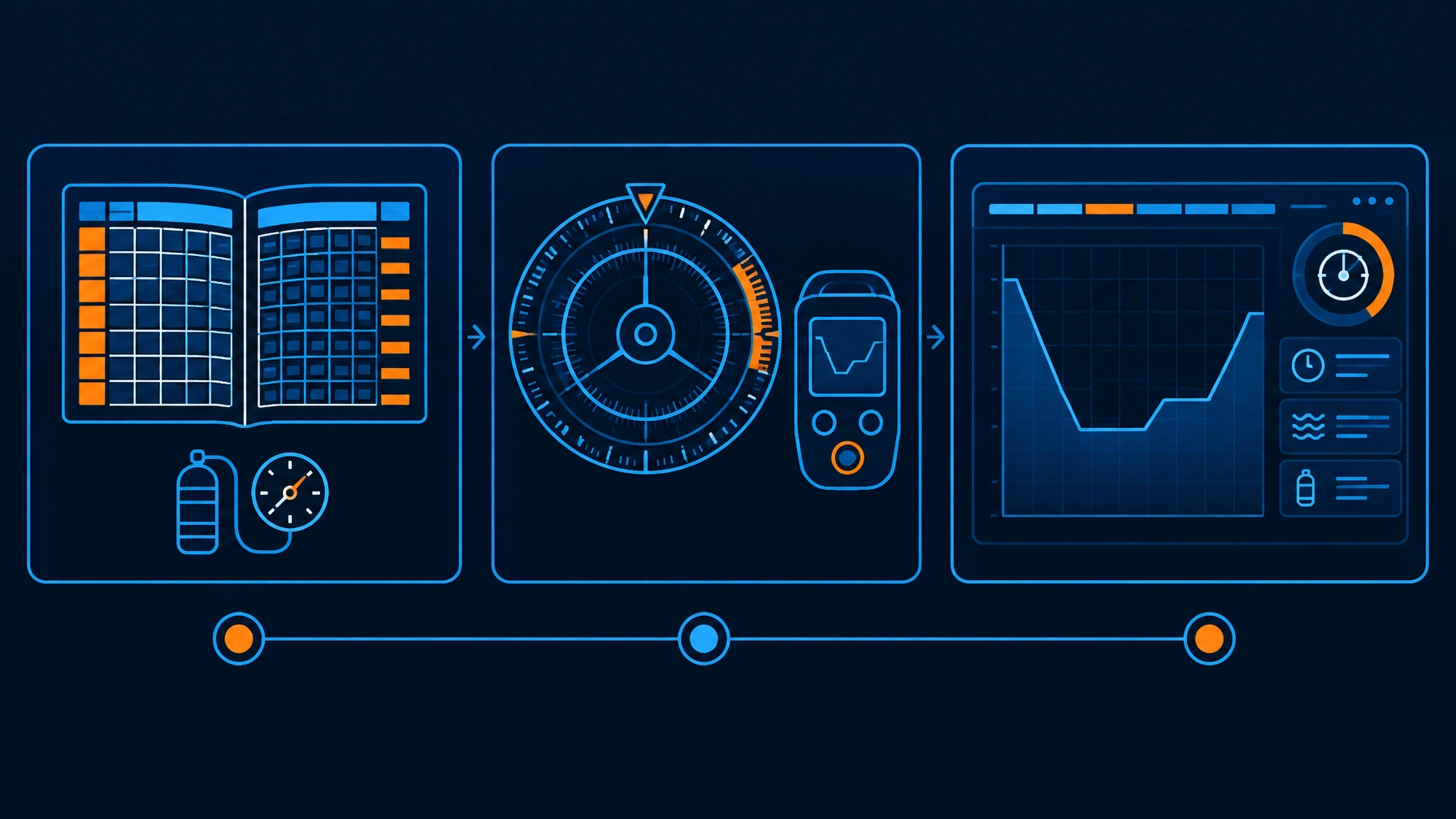
A milestone in 1988-and a model that endured
PADI’s historical account describes the RDP as a table and Wheel introduced in 1988, following PADI-funded development of a no-stop decompression model. PADI’s history of the 1980s identifies it as the first dive table designed specifically for no-stop recreational diving.
Later products brought the RDP into electronic formats. The eRDP arrived in 2005, followed by the eRDPML in 2008. Those tools made planning more convenient in different ways, including multilevel planning. But they remained formats of the RDP system, rather than a new decompression model. DIVE Magazine’s 2019 report noted the retirement of the plastic eRDPML and the transition toward digital training aids.
The distinction matters. Dive planning technology has changed, and dive computers now calculate and display information in real time. The narrower point is that the RDP model behind a major recreational planning system traces back to 1988, while the tools divers use to prepare a plan have not consistently kept pace with modern expectations for clear, interactive software.
That gap has consequences for practice. A Dive Training Magazine article on the decline of dive tables describes a longstanding pattern: divers may receive instruction in manual planning, then rely on a divemaster’s briefing or follow a computer during the dive. The article was originally published in 1999 and republished online in 2016. It is not a current survey, but it documents that the disconnect between learning planning and using it was recognized decades ago.
The usability problem is a planning problem
A planning method only helps when divers can use it correctly and consistently. If a tool is confusing, difficult to access, or awkward to use on a phone, people may skip planning or rely on someone else’s plan without understanding its assumptions.
Fontecchio says he saw this problem while teaching.
“I don’t think the answer is to blame divers for not using tools that frustrate them. Planning should be understandable enough that a diver can check a profile, see the assumptions, and make informed adjustments. The goal is not to replace training or judgment. It is to make preparation practical.”
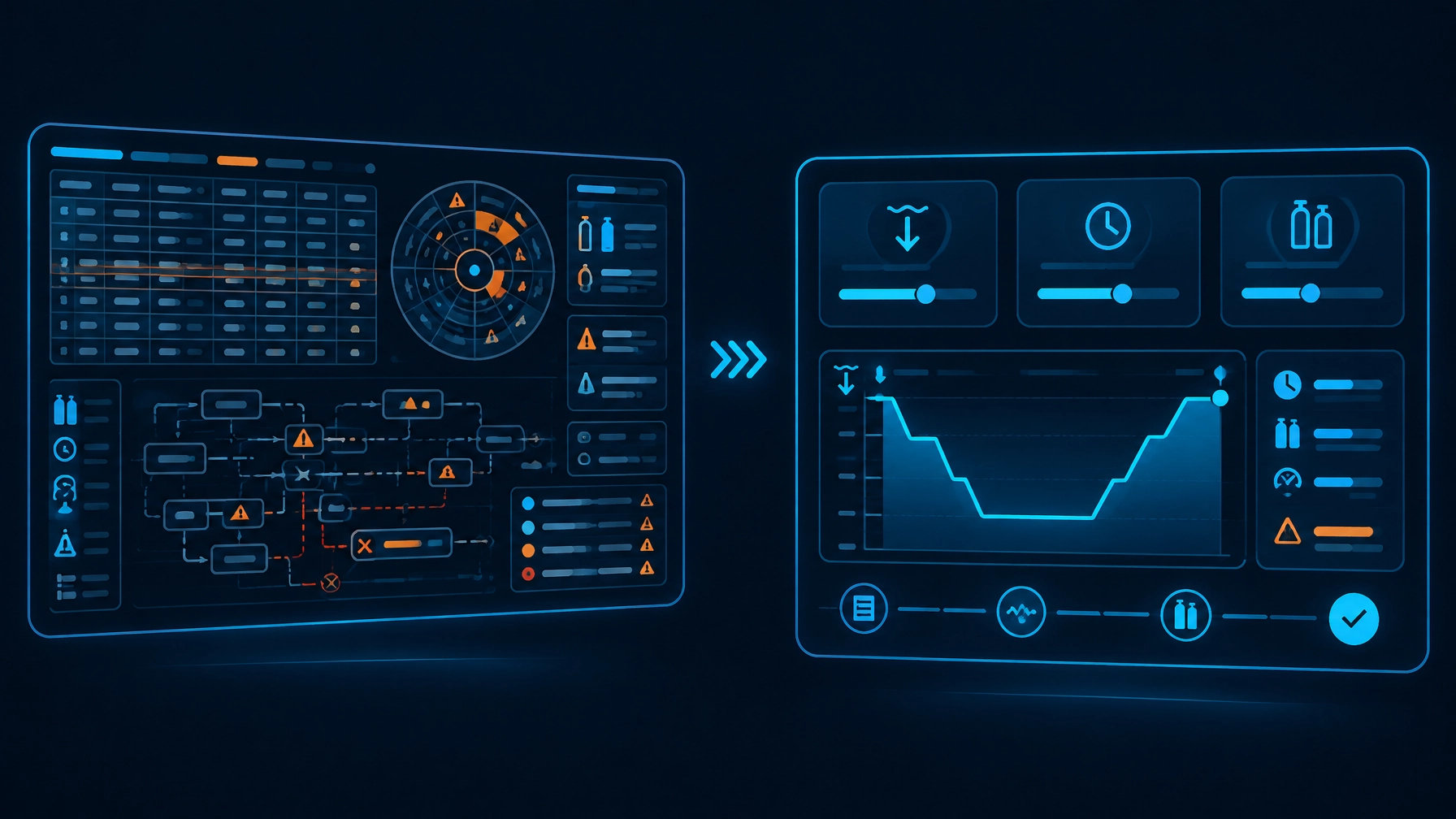
DepthPlanner’s DiveCommand is designed to put common planning inputs and outputs in one browser-based workflow. Its free version supports single-dive Bühlmann ZHL-16C planning with gradient factors, 16-compartment tissue tracking, Nitrox calculations (including maximum operating depth (MOD), partial pressure of oxygen (ppO₂), and equivalent air depth (EAD)) and altitude corrections up to 11,000 feet.
The Pro version adds multi-day repetitive dive tracking, Trimix planning, CNS oxygen exposure and OTU calculations, a no-fly countdown, marine forecasts, a tank library, and a digital dive log with CSV export. The planner works offline after installation and does not require an account.
Planning software should be clear about its assumptions
Different planning tools can return different numbers. Results depend on the decompression model, gradient factors, ascent rate, rounding conventions, water type, gas, altitude, and other settings. A planner that claims to match a computer under every circumstance would be overstating what software can guarantee.
DiveCommand uses the Bühlmann ZHL-16C model and displays its planning settings. The company publishes its validation results, including comparisons against an independent reference implementation and cross-checks against a separate open-source Bühlmann engine. DepthPlanner reports that its tests cover NDLs, decompression schedules, gases, altitude, water type, repetitive diving, and other planning cases.
Matching a model is not the same as guaranteeing identical displays across every computer. Computer manufacturers may use different ascent rates, stop conventions, rounding, and configuration settings. Divers should compare like with like, follow the settings and procedures relevant to their training, and use a dive computer underwater. A planning app does not replace a computer, a gas analysis, a dive briefing, or qualified instruction.
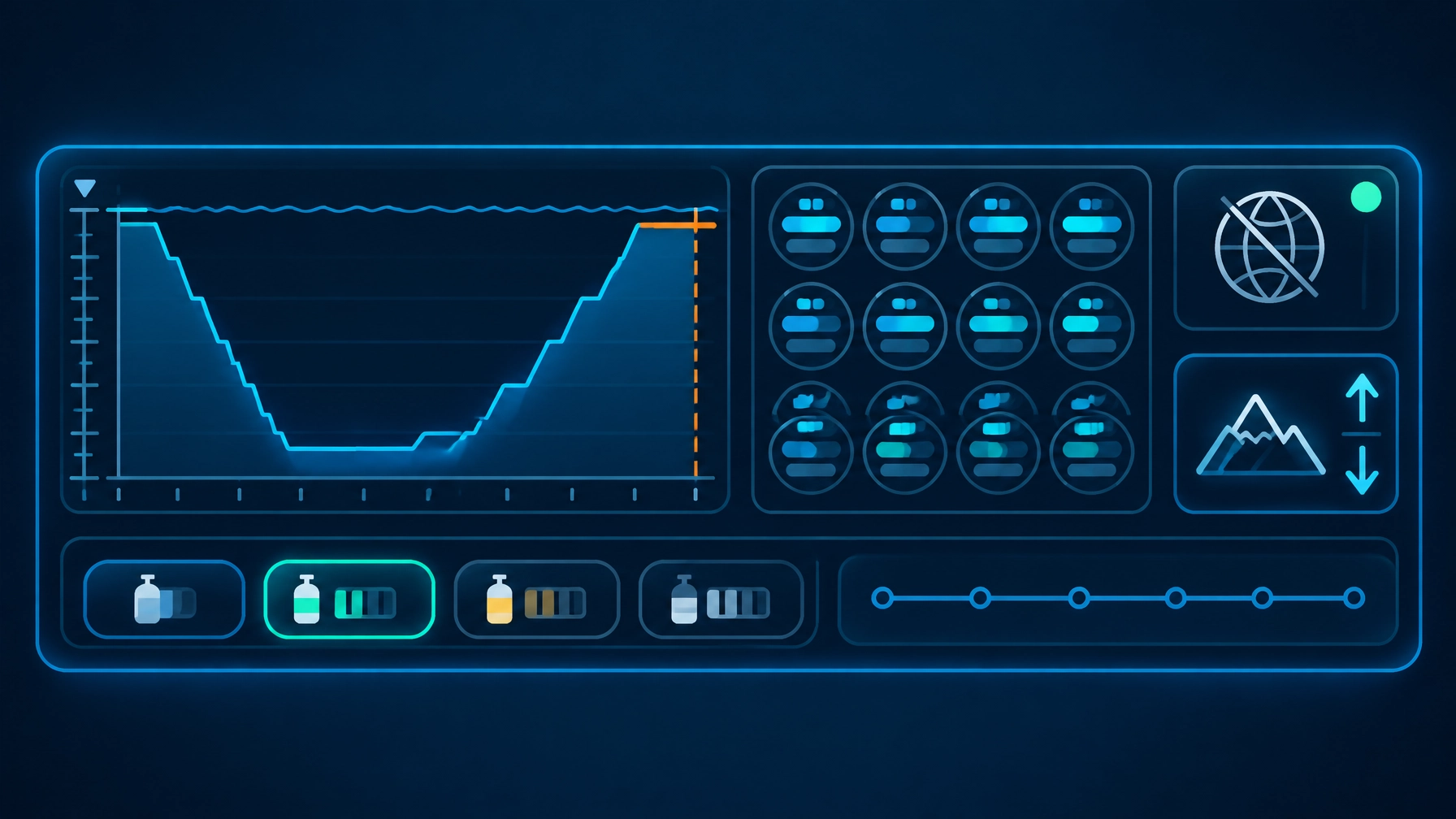
Bringing planning into the tools divers use now
The 1988 RDP marked an important step: a decompression table built for recreational no-stop diving. The next challenge is not simply to digitize legacy formats. It is to make planning usable before the dive, transparent about assumptions, and available where divers actually prepare: on a phone, tablet, or computer, including places without internet access.
DepthPlanner also offers IncCommand for public safety dive teams and NavCommand for commercial diving operations. Those products address different operational requirements, including incident management and commercial dive planning; they are not substitutes for agency procedures, applicable regulations, or supervisor oversight.
The company’s approach is to make the plan easier to create and examine, not to present software as a guarantee of safety. Divers remain responsible for staying within their training and certification, confirming gas and equipment, agreeing on the plan with their team, and adapting or canceling when conditions require it.
Divers can try DiveCommand and review the published test results before deciding whether it fits their planning workflow.
About DepthPlanner
DepthPlanner provides precision decompression and dive-planning software for recreational, technical, commercial, and public safety divers. Its tools include DiveCommand, IncCommand, and NavCommand. The company says its algorithms were verified with Δ=0 across 12,067 test cases compared with Shearwater, Garmin, and Suunto computers. Its browser-based tools can be installed on a device and used offline without an account. Product details are available at depthplanner.com.
Media Contact
Scott Fontecchio
scott@diverobotix.com
depthplanner.com